


GMBapi.com
Member
- Joined
- Aug 5, 2021
- Messages
- 87
- Solutions
- 4
- Reaction score
- 40
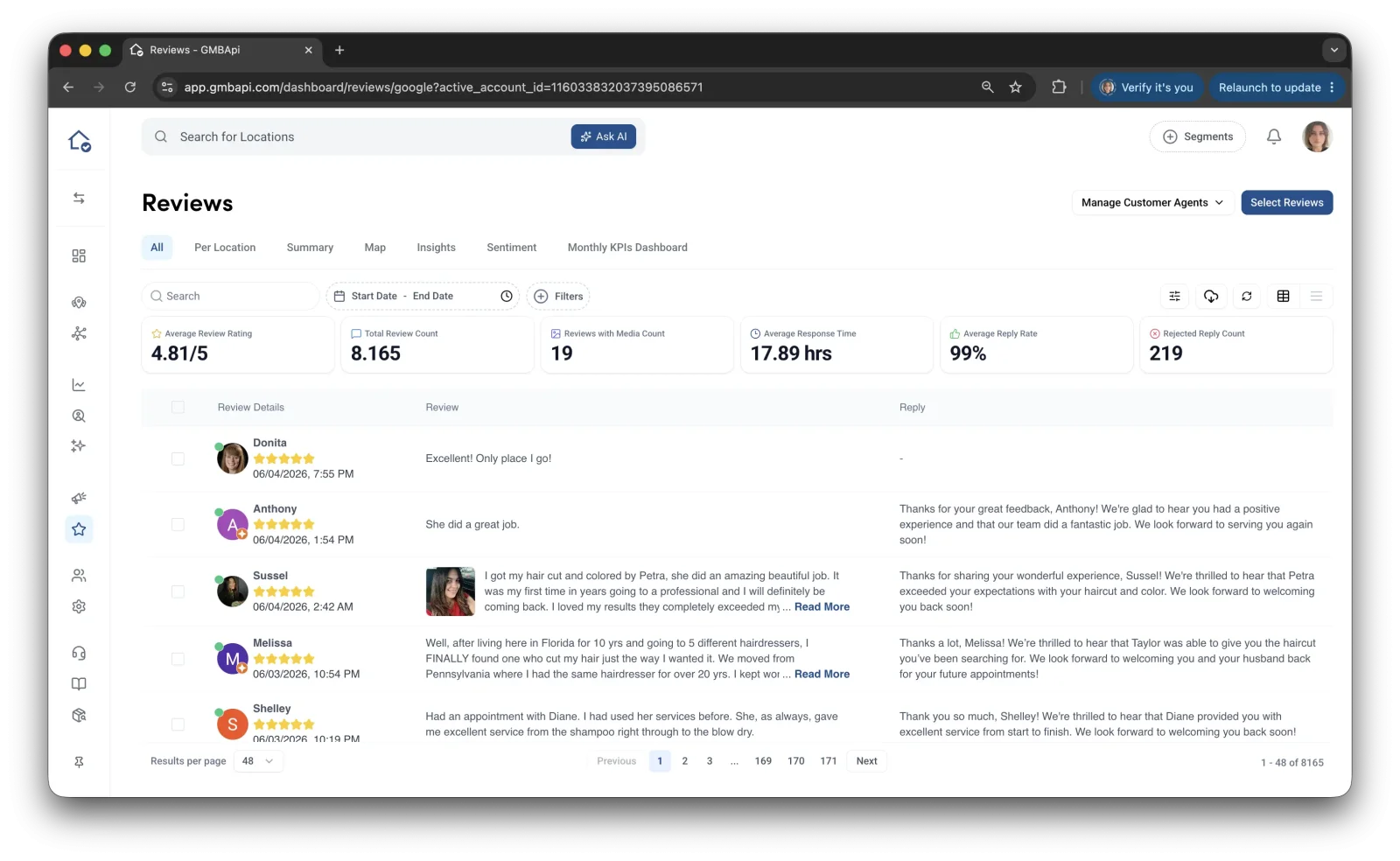
Since April 2026, the Google Business Profile API has exposed a ReviewReplyState field on every reply; PENDING, APPROVED, or REJECTED. Before that, every reply posted via API went live automatically. No moderation. No filter.
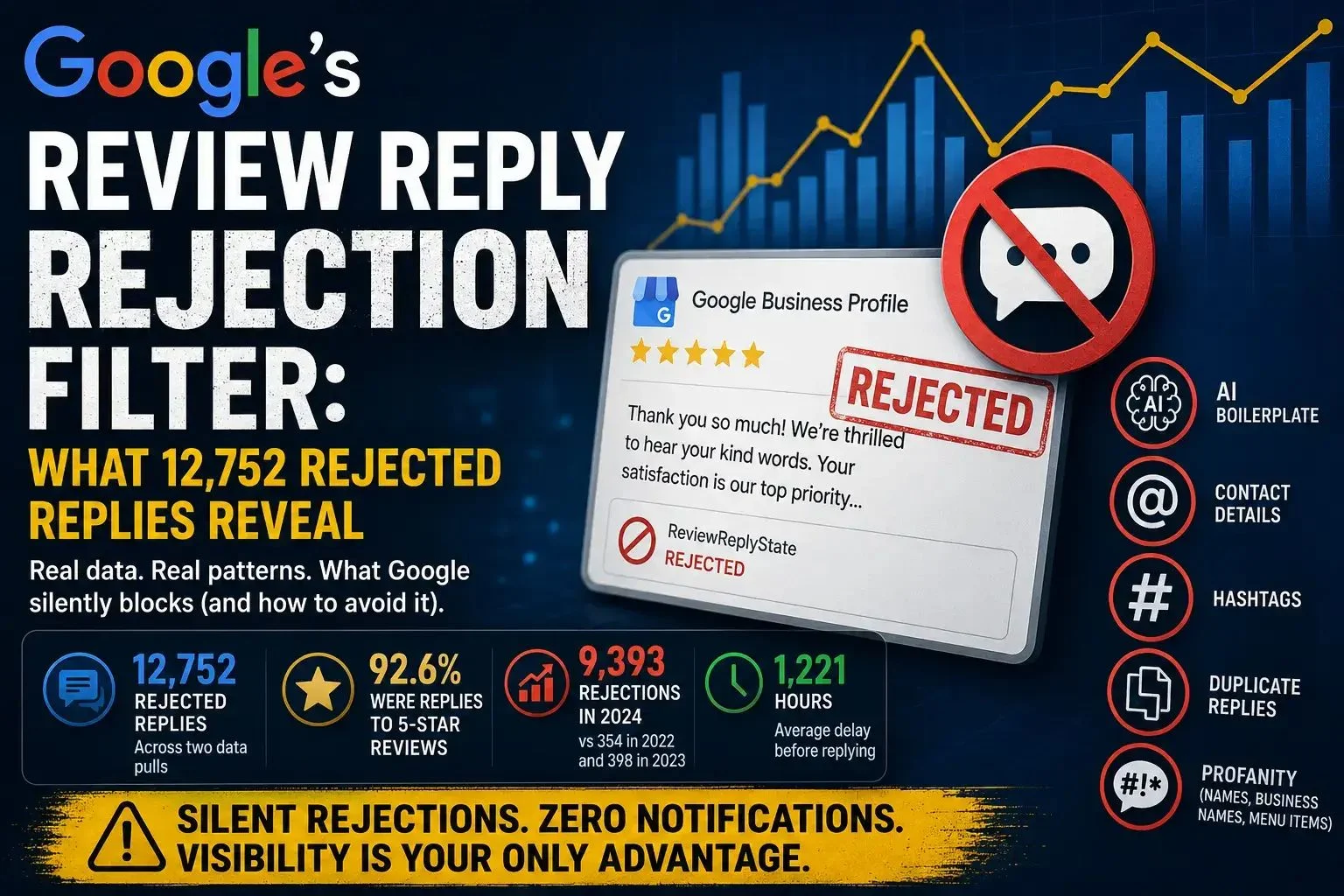
We pulled all rejected replies visible in our platform data across two extractions (22 April and 28 May 2026) and ended up with 12,752 rejected replies. As far as we know, this is the first time this data has been published at this scale. Here's what stood out.
The numbers:
The most common rejection triggers:
The part that interests me most
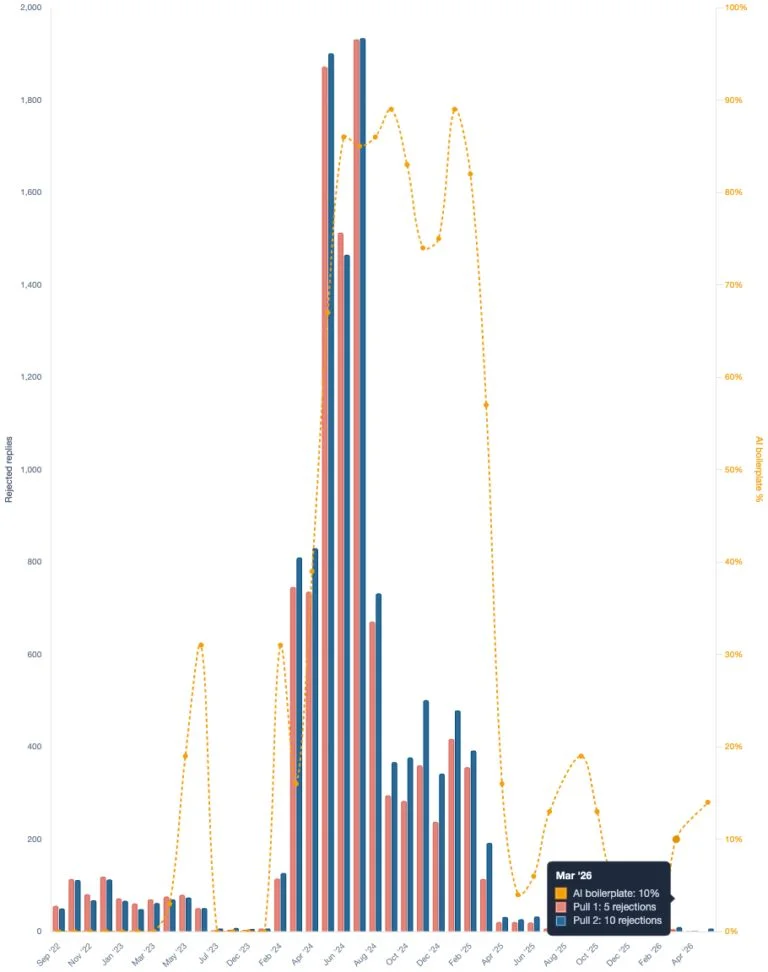
From April 2025 onwards, the rejection profile changes significantly. Total volume drops and the AI boilerplate share of rejections falls from above 70% to single digits in some months. It doesn't align with us launching AI reply functionality (the volume of AI-assisted replies we process went up, not down). So either businesses quietly stopped using poor-quality templates, or Google's filter is operating at a different stage of the pipeline.
The invisible nature of this is the core issue. There's no notification. No error. The reply appears sent while sitting in a REJECTED state internally. Without API-level visibility into ReviewReplyState, you'd never know it happened.
Curious whether anyone here has seen rejected replies surface in client accounts, or has a different read on what changed from April 2025. Also genuinely interested in the broader question: if Google is using review reply content to build contextual and entity understanding of a business, what does a silently rejected reply mean for how that business appears on AI surfaces?
Full analysis here: https://gmbapi.com/news/google-rejected-review-replies-analysis/
We pulled all rejected replies visible in our platform data across two extractions (22 April and 28 May 2026) and ended up with 12,752 rejected replies. As far as we know, this is the first time this data has been published at this scale. Here's what stood out.
The numbers:
- 92.6% of rejections are on 5-star reviews
- Rejections went from 398 in all of 2023 to 9,393 in 2024 alone
- 67% of all rejected replies contain detectable AI boilerplate
- The average rejected reply was submitted 1,221 hours (roughly 50 days) after the original review — bulk scheduling is a clear pattern
The most common rejection triggers:
- AI boilerplate - phrases like "thrilled to hear," "your kind words," "look forward to welcoming you back" appear in the majority of rejected replies. The timing of the 2024 spike correlates exactly with the mass adoption of AI reply tools. Google appears to have built a statistical model of what low-quality automated replies look like.
- Profanity in context - this one catches people out. Google's filter doesn't understand context. A Dutch business replying "Beste Dick, bedankt voor je review..." gets rejected because the reviewer's legal name triggers the filter. A restaurant called Burger Bitch can't sign off replies with their own name. A bar mentioning a "Pornstar Martini" in their response gets blocked. The filter is pattern matching, not reading intent.
- Exact duplicate replies at scale - one account sent "Thank you!" verbatim to over 100 consecutive reviews. All rejected. Same spam signals as email.
- Contact details embedded in replies - 2.6% of rejections contained an email address in the reply body. Usually well-intentioned ("email us at...") but treated as off-platform solicitation.
- Hashtags - 38 replies with hashtags in the dataset. All 38 rejected. Don't use them in replies.
The part that interests me most
From April 2025 onwards, the rejection profile changes significantly. Total volume drops and the AI boilerplate share of rejections falls from above 70% to single digits in some months. It doesn't align with us launching AI reply functionality (the volume of AI-assisted replies we process went up, not down). So either businesses quietly stopped using poor-quality templates, or Google's filter is operating at a different stage of the pipeline.
The invisible nature of this is the core issue. There's no notification. No error. The reply appears sent while sitting in a REJECTED state internally. Without API-level visibility into ReviewReplyState, you'd never know it happened.
Curious whether anyone here has seen rejected replies surface in client accounts, or has a different read on what changed from April 2025. Also genuinely interested in the broader question: if Google is using review reply content to build contextual and entity understanding of a business, what does a silently rejected reply mean for how that business appears on AI surfaces?
Full analysis here: https://gmbapi.com/news/google-rejected-review-replies-analysis/